
 After the last couple of posts I got some interesting comments about familiarity being important to intuition. Roger Attrill pointed out that Adobe users would find Photoshop intuitive (while others wouldn’t) and Bob Salmon pointed out that musicians might find software using some kind of musical-score based interface natural to use that the rest of us wouldn’t. Read More …
Getting complicated
 During my recent research into the world of sensory interfaces, I had at least a dozen discussions, maybe more, about what the word intuitive means. I can’t remotely claim to have cracked this: on the contrary, it seems to me that people are still at the stage of figuring out the right questions to ask. It’s true that human-machine interfaces have been well studied and there’s vast literature on the subject. However, though sensory interfaces that allow you to interact with the real world (rather than a computer world) will certainly have many things in common with virtual displays, I think there will be some differences too. Read More …
Intuition versus attention
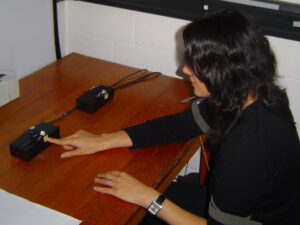 One of the aspirations of those trying to feed information into the brain through the senses is how to make the process intuitive. Roughly we know what this means: we want to have the information be self-explanatory, to not require any further thought, to immediately and naturally provoke the behavior that we intended. But what exactly does this mean in practice? How does it break down? Read More …
Seeing with your brain
 Biological brains can do something that we’re still working on building into machines: rewire themselves to take advantage of the best information available. This is a well-known phenomenon, but it’s not widely understood just how radically different the rewiring or optimized wiring can be from what is considered ‘normal’. Read More …
Hearing with your chest
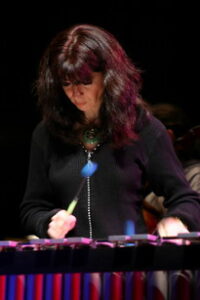 As well as explaining evolution (see my last post), analog feedback may explain the ability of deaf people to hear through their bodies as the percussionist Evelyn Glennie learned to do. According to her biography,
Evelyn spent a lot of time when she was young (with the help of Ron Forbes her percussion teacher at school) refining her ability to detect vibrations. She would stand with her hands against the classroom wall while Ron played notes on the timpani (timpani produce a lot of vibrations). Eventually Evelyn managed to distinguish the rough pitch of notes by associating where on her body she felt the sound with the sense of perfect pitch she had before losing her hearing. The low sounds she feels mainly in her legs and feet and high sounds might be particular places on her face, neck and chest.
Where a little means a lot
 One of the things that has driven my work over the last decade has been an interest in analog systems (which I alluded to in an earlier post) that perform what I call physical computation. What that means is that they are not ‘programmed’ except in the sense that, like all objects, they are forced to obey the laws of physics. When physical objects become sufficiently complicated, then they start to behave in interesting ways while still just doing what comes naturally. Read More …
I want my ESP
 Stefan Marti is a research scientist with Samsung in San Jose. When he was a student, he had the experience of walking around with a broken vibrating pager that gave him an unexpected extra sense: for certain kinds of electromagnetic fields. From the buzzing in his pocket, he knew when people were making popcorn in the microwave, when there was a wireless router nearby and, most interestingly, when a phone—whether his or someone else’s—was about to ring. Read More …
Choosing what to see
 In my previous posts I discussed using tactile displays (the tongue display and spatial-orientation vest) in order to sense the world in new ways. In both cases my immediate reaction was to close my eyes, which may seem foolish: I was cutting out visual information that might have been useful. However, there was method in my madness. Read More …
Patrick Purcell versus the little grey man
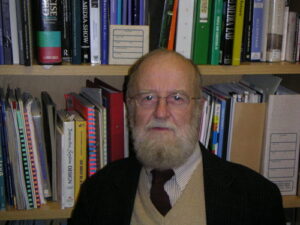 My friend Patrick Purcell died just short of his 78th birthday last week. I’m still thinking about what I want to say about him personally, but his death has made me think about that of another friend of mine, about what they had in common, and about dealing with grief. Read More …
A new kind of military conflict
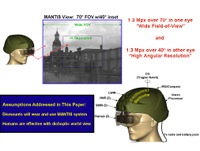 We are notoriously bad at simultaneously doing different tasks with the same bit of brain. For instance, in his book Seeing Voices, Oliver Sacks points out that it’s known to be extremely difficult to sign in American Sign Language while speaking in English, which has a completely different syntax and grammar. Likewise, it is thought to be impossible for someone to write Chinese while speaking English. So, if the tongue and the skin are providing imagery to the brain (as discussed in the last post), it may be important that it’s complimentary to that coming from the eyes: enriching the visual stream rather than feeding in some completely new kind of information. Read More …