
 Biological brains can do something that we’re still working on building into machines: rewire themselves to take advantage of the best information available. This is a well-known phenomenon, but it’s not widely understood just how radically different the rewiring or optimized wiring can be from what is considered ‘normal’. Read More …
Author: Sunny Bains
Hearing with your chest
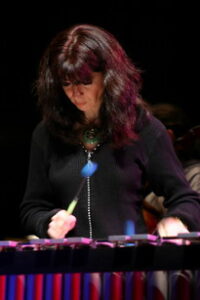 As well as explaining evolution (see my last post), analog feedback may explain the ability of deaf people to hear through their bodies as the percussionist Evelyn Glennie learned to do. According to her biography,
Evelyn spent a lot of time when she was young (with the help of Ron Forbes her percussion teacher at school) refining her ability to detect vibrations. She would stand with her hands against the classroom wall while Ron played notes on the timpani (timpani produce a lot of vibrations). Eventually Evelyn managed to distinguish the rough pitch of notes by associating where on her body she felt the sound with the sense of perfect pitch she had before losing her hearing. The low sounds she feels mainly in her legs and feet and high sounds might be particular places on her face, neck and chest.
Where a little means a lot
 One of the things that has driven my work over the last decade has been an interest in analog systems (which I alluded to in an earlier post) that perform what I call physical computation. What that means is that they are not ‘programmed’ except in the sense that, like all objects, they are forced to obey the laws of physics. When physical objects become sufficiently complicated, then they start to behave in interesting ways while still just doing what comes naturally. Read More …
I want my ESP
 Stefan Marti is a research scientist with Samsung in San Jose. When he was a student, he had the experience of walking around with a broken vibrating pager that gave him an unexpected extra sense: for certain kinds of electromagnetic fields. From the buzzing in his pocket, he knew when people were making popcorn in the microwave, when there was a wireless router nearby and, most interestingly, when a phone—whether his or someone else’s—was about to ring. Read More …
Choosing what to see
 In my previous posts I discussed using tactile displays (the tongue display and spatial-orientation vest) in order to sense the world in new ways. In both cases my immediate reaction was to close my eyes, which may seem foolish: I was cutting out visual information that might have been useful. However, there was method in my madness. Read More …
A new kind of military conflict
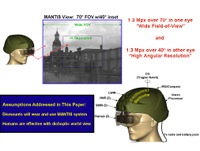 We are notoriously bad at simultaneously doing different tasks with the same bit of brain. For instance, in his book Seeing Voices, Oliver Sacks points out that it’s known to be extremely difficult to sign in American Sign Language while speaking in English, which has a completely different syntax and grammar. Likewise, it is thought to be impossible for someone to write Chinese while speaking English. So, if the tongue and the skin are providing imagery to the brain (as discussed in the last post), it may be important that it’s complimentary to that coming from the eyes: enriching the visual stream rather than feeding in some completely new kind of information. Read More …
Escaping from the microscope
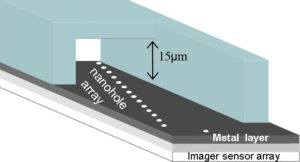 New ‘lab-on-a-chip’ systems, usually a few centimetres on a side or less, are currently in use or development for all kinds of chemical and biological applications: from testing water for pathogens to genetic sequencing. A liquid sample injected (or pulled) into the chip travels through micro-channels etched into glass, plastic, or silicon. These lead the sample through the chip to testing sites, with progress controlled by tiny, integrated, electronic or mechanical devices. Read More …
Fuzzy thinking
 I love watching CSI: Crime Scene Investigation, but there’s one thing that makes me want to throw things at the television. Here’s how it goes. The investigators have found a security camera at the scene and have taken the tape back to the lab. They roll forward to the point where the crime is taking place, and look for clues about the perpetrator: maybe a badge, a signet ring, or tattoo. “Zoom in on the ring,” says the person in charge, and the grainy, highly-pixelated image of the ring fills the screen. “Now enhance that section.” Magically, the 50 or so pixels that show the ring vanish and a clear, crisp image of the ring appears in its place. Read More …
A little night vision
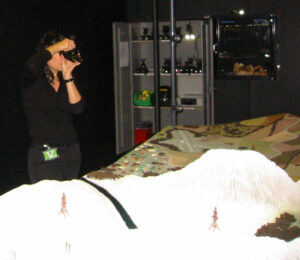 Over the last couple of weeks I’ve had the chance to try two pairs of night vision goggles (NVGs). The first I tried while on a visit to the Royal Air Force base at Henlow (see right). I was allowed to sit in with part of a training course for eight pilots (six Harrier jump jet, two Tornado, if you’re interested) who were about to fly with night vision for the first time. Read More …
Flying blind
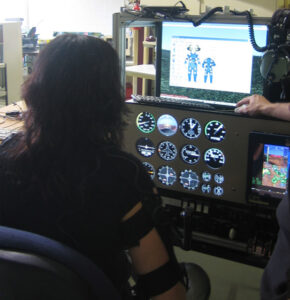 Of all the gizmos I’ve tried in my recent research, the tactile suit was the most exciting. Pilots can become disoriented because of poor or confusing visual feedback conflicting with other cues, a phenomenon that accounts for a significant proportion (up to 10%) of air accidents. The tactile suit is intended to help by letting the pilot feel their orientation through their body rather than trusting their vestibular (inner ear) or visual systems. Read More …